


Accurate translation services have become critically important for businesses looking to expand their reach and ensure smooth operations across regions. A notable example of the importance of accurate translation is the incident involving the mistranslation of a China Eastern Airlines menu. This incident provides insightful perspectives on the importance of professional translation services and the potential consequences of neglecting them.
What happened?
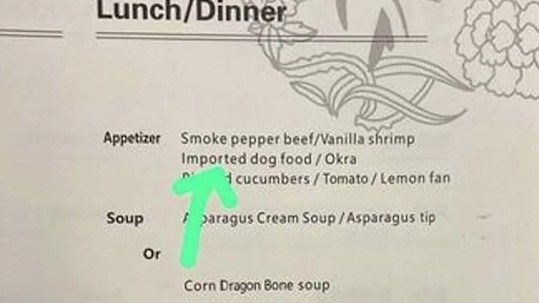
A passenger on a China Eastern Airlines flight shared a photo on social media, claiming it was a translation error on the English menu with the phrase "imported dog food with okra." The image, posted by Conrad Wu, is believed to depict a business class menu, which includes meat, seafood, and soup.
Conrad's Chinese tweet, roughly translated into English, reads: "China Eastern Airlines Business Class menu, what exactly is it?".
The photo immediately went viral on social media, leaving many people astonished by the item on the menu. Some even joked that it might be sausage.
One individual, dissatisfied with the English translation, stated: "Nearly 90% of the English on the menu is wrong. What a farce for an international airline."
It turns out the item on the menu was labeled "imported cured meat," a popular appetizer in Chinese cuisine. The Chinese words for "bacon" (腊肉) and "dog meat" (狗肉) have similar pronunciations, causing confusion for the translator.
China Eastern Airlines responded to the criticism, emphasizing that the addition of "Imported Dog Food" was merely a "typographical error." They subsequently corrected the menu and apologized for any inconvenience or confusion caused by the mistake. The airline pledged to improve its quality control and translation processes. However, they did not disclose the name of the translator or the consequences of the error.
How did this happen?
The incident involving the mistranslation of the menu on a China Eastern Airlines flight may stem from several related factors. These issues highlight common errors in the translation process, which can lead to serious mistakes if not handled properly.
Dependence on automated tools
This airline may have relied on automated translation tools such as Google Translate or other machine translation software. While useful for basic translations, these tools often fail to accurately translate complex or contextually specific texts. Machine translation can struggle with idioms, cultural references, and technical jargon, resulting in literal and often inaccurate translations.
Lack of professional supervision
Professional translators are highly trained and possess in-depth knowledge of both the source and target languages, as well as their cultural contexts. The absence of these experts in the translation process means a higher likelihood of errors. In this case, it appears the menu translation was not reviewed by a qualified translator who could have detected and corrected the errors.
Cultural misunderstanding
The translator must adapt the content to suit the cultural norms and expectations of the target audience. In this case, the translation failed to consider how English-speaking passengers would perceive the dish. A professional translator with a deep understanding of the culture could provide a more accurate and engaging description.
Implement quality control measures
The quality assurance process includes multiple layers of review, including initial translation, editing, proofreading, and final approval. These steps help detect and correct errors before the text is published or distributed. The lack of such rigorous quality control may have contributed to the menu translation errors.
Lessons from Translation
China Eastern Airlines' mistranslation of its menu highlights several important lessons for businesses operating in multilingual environments.
The importance of professional translation services.
Relying on automated translation tools or unqualified translators can lead to significant errors. Professional translation services ensure accuracy and cultural appropriateness, minimizing the risk of regrettable mistakes.
Cultural sensitivity
Effective translation goes beyond simply replacing individual words. Understanding cultural nuances and context is crucial for accurately conveying the intended message. Businesses need to collaborate with translators who are not only fluent in the target language but also possess a deep understanding of the culture.
Quality control and proofreading
Implementing rigorous quality control measures, including proofreading and multiple rounds of review by native speakers, can detect errors before they are widely published. This step is crucial for maintaining credibility and professionalism.
Brand image and customer trust
Inaccurate translations can damage brand image and erode customer trust. Investing in high-quality translation services is just a small price to pay compared to the potential harm to reputation and customer relationships.
Global market competitiveness
Accurate translation is crucial for businesses wanting to compete in the global market. Clear and precise communication in the local language helps build strong relationships with customers and partners.
Conclude
The mistranslation of China Eastern Airlines' menu serves as a stark reminder of the importance of accurate and culturally appropriate translations. Businesses need to recognize the value of professional translation services to avoid similar mistakes and protect their brand image.
Partnering with a reputable provider like Wise-Concetti ensures accurate, culturally appropriate, and high-quality translations, thereby enhancing global communication and fostering closer connections with international audiences.
 Trending
  Categories